Eight homes in Caruth Hills sold over the past year. The median time to contract was four days. A few blocks away in University Heights, thirty-one homes sold over the same period, and the median time to contract was twenty-four days. Both neighborhoods sit inside University Park city limits. Both feed the same Highland Park Independent School District boundary. And both get folded into the single number every portal quotes when someone searches "University Park median home price."
That number, depending on which tracker you check and which month you catch it, has landed anywhere from $2.25 million to $3.3 million over the past year. The spread is not a data quality problem. It is what happens when you average a four-day market with a twenty-four-day market and call the result one city.
If you are comparing University Park against Highland Park or Preston Hollow using a single median, you are comparing a blend against a blend. The number that matters is the one specific to the pocket you are actually bidding in.
One City, Several Transactions
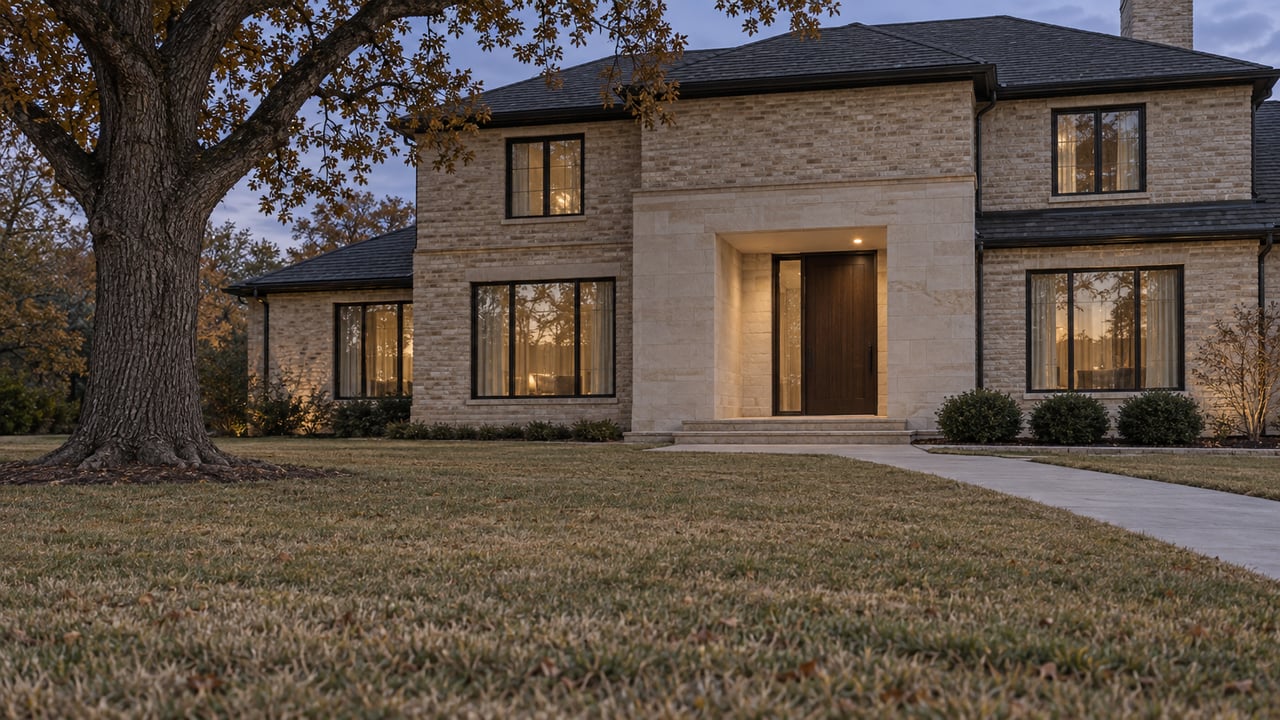
University Park was incorporated in 1924, built out around a handful of distinct sections that grew up at different times for different buyers. Volk Estates was developed as the neighborhood's estate section, with lots running one to two acres and Turtle Creek frontage on some parcels, drawing architects like Hal Thomson and the firm of Fooshee and Cheek. Caruth Hills sits along the southern boundary with generous, Park Cities-scale lots that lean the value equation toward land. SMU Heights, tucked against the campus, runs smaller and denser, with compact lots and enough rental turnover near the university to add pricing variation that a stable owner-occupied street would not show. University Heights, on the east side, mixes 1940s bungalows with rebuilds on the same lot lines.
Those are not four flavors of the same market. They are four markets that happen to share a zip code, a school district, and a city council.
The closed-sale numbers make the point concrete. Over roughly the past year, Caruth Hills closed at a median price near $3.48 million and moved in four days. University Heights closed higher, near $4.6 million, but took six times as long to get under contract. A buyer who only knows the citywide median walks into either pocket with the wrong expectation about both price and pace.
What You're Actually Paying For
Most of University Park's housing stock dates from the 1920s through the 1970s. That means a large share of what's for sale at any given time is an older structure sitting on a lot that has appreciated independently of the house on it. Buyers routinely face the same fork: renovate what's there, or clear the lot and start over.
The cost bands are consistent enough across the market to plan against. Cosmetic-to-moderate renovation on a 1950s or 1960s University Park home runs roughly $100 to $250 per square foot. A full gut renovation runs $250 to $400-plus per square foot. New construction, not counting the land underneath it, runs $350 to $600-plus per square foot depending on finish level.
Those numbers only tell you something useful once you know which pocket you're standing in. In Caruth Hills, where lot size is the largest single driver of price, the math tends to favor a rebuild because the land is doing most of the work regardless of what sits on it. In University Heights, where land appreciation has been steady but lots are smaller and more uniform, a well-executed renovation can compete with new construction on resale without requiring the full teardown cost. In SMU Heights, compact lots and rental activity mean the renovate-versus-rebuild decision is more sensitive to what the specific block is doing, not just what the neighborhood as a whole is doing.
| Lot Character | What Drives the Price | |
|---|---|---|
| Volk Estates | 1 to 2 acres, some Turtle Creek frontage | Architectural pedigree and estate-scale land |
| Caruth Hills | Generous by Park Cities standards | Land value more than the structure on it |
| University Heights | Mixed 1940s bungalows and rebuilds | Land appreciation and lot consistency |
| SMU Heights | Compact, near campus | Walkability to campus, more price variation from rental turnover |
| Westminster Place | Moderate, uniform | Predictable resale from consistent streetscape |
The Guardrail That Isn't There
Highland Park runs new construction and major renovations through a Zoning Commission review. University Park does not have an equivalent architectural review board. Building codes and setback requirements still apply, but there is no design review layer sitting between a buyer's plans and the permit office.
That matters most in the pockets where teardown activity is already common, because it means the house next door to whatever you buy could be replaced by something with a very different scale or style than what's there now, and there is no city design board standing in the way. Buyers who assume University Park works like its southern neighbor on this point are assuming a guardrail that doesn't exist here. It is worth confirming with an agent who knows the permitting process before treating a quiet block as a fixed quantity.
Why Overpricing Costs More Here Than It Looks
Across roughly 188 closed sales over the past year in University Park, sellers who held their original asking price sold in a median of eleven days at 98.7 percent of that price. Sellers who started high and later cut took a median of eighty-two days and still only recovered 90 percent of their original ask, roughly $234,900 short of what a correctly priced listing would have captured.
That gap reads differently depending on which pocket you're in. In a four-day market like Caruth Hills, there is essentially no room to test a number and adjust. A listing that is still active after two weeks is itself a signal to buyers that something is off, whether or not that's true. In a twenty-four-day market like University Heights, sellers have more runway before a stale listing starts working against them, but the eventual cost of getting the number wrong is the same asymmetry: fast concession, slow recovery.
What's New This Year
One change is worth knowing if you're transacting in University Park in the second half of 2026. In May 2026, the University Park City Council approved a Public Improvement District for Snider Plaza, the retail corridor at Hillcrest and Lovers Lane that has anchored the neighborhood since 1927. Revenue collection begins in January 2027 and will fund longer-term upkeep of the corridor, including the employee parking program that keeps shop staff off residential side streets. It's a small piece of civic housekeeping, but it's part of what an incorporated Park Cities address is actually paying for beyond the school district name.
A Few Questions Worth Settling Early
Is University Park the same as Highland Park? No. They share the Highland Park Independent School District and get grouped together as the Park Cities, but they are separately incorporated cities, each with its own government and police department.
How fast are homes actually moving right now? It depends entirely on the pocket. Citywide trackers have shown days on market ranging from the low twenties to the mid-forties over the past several months, but that range collapses once you isolate a specific section. Caruth Hills has been closing in days, not weeks, while other parts of the city move closer to a month.
If you're weighing University Park against Highland Park or Preston Hollow, or trying to figure out whether a specific block favors a renovation or a rebuild, the citywide median won't answer either question. The pocket will. Janell Branch works these blocks street by street, with the investor and design background to evaluate a lot's upside before you write an offer. Schedule a consultation with Janell Branch to talk through the specific pocket you're considering.
This article is general information, not legal, tax or financial advice. Consult a qualified professional about your situation.